
In partnership with the Solví Group, the event will offset greenhouse gas emissions with carbon credits generated at the landfill.
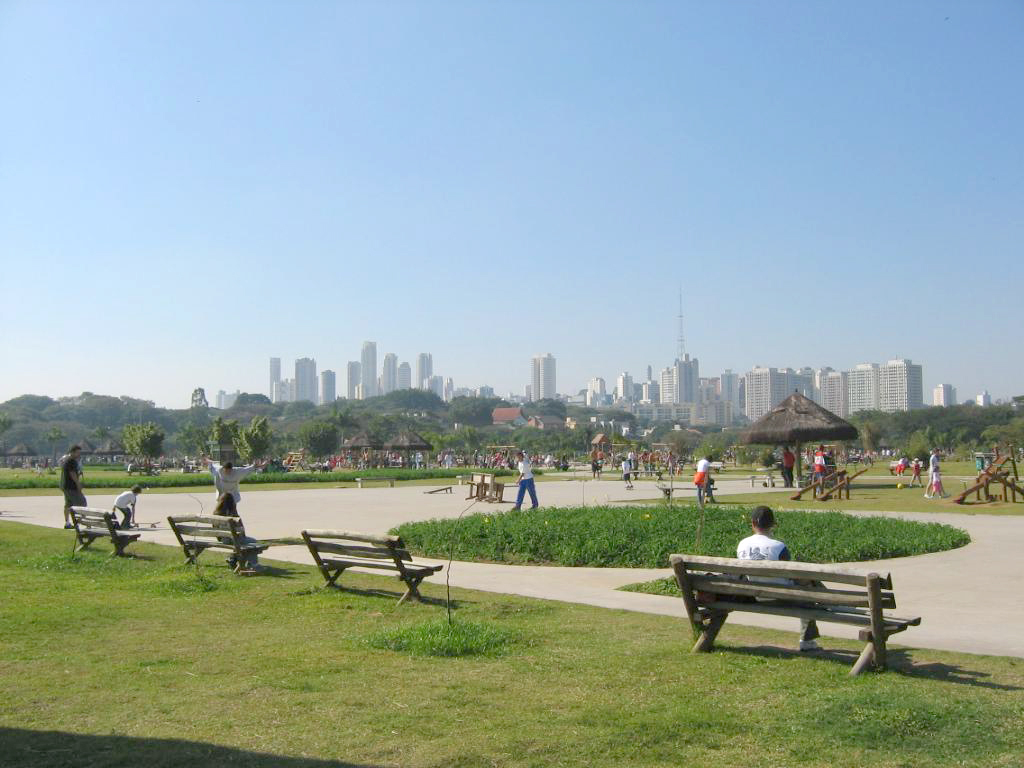
The Agenda SP+Verde Summit, an international pre-COP event promoted by the Government of São Paulo, in partnership with the City of São Paulo and the University of São Paulo, will have its greenhouse gas emissions offset through carbon credits generated at the Caieiras Landfill, managed by the Solví Group, one of the event’s sponsors. The meeting will take place on November 4th and 5th at Villa-Lobos Park and will bring together experts, leaders, and representatives of society to discuss sustainable development and the green economy.
A complete structure will be set up at Villa-Lobos Park, including seven stages, a business roundtable, innovation and circularity areas, a gastronomic space, and cultural attractions. The expectation is to receive approximately 5,000 people per day, including international delegations, government representatives, academics, the private sector, investors, and third-sector organizations.
The event’s carbon emissions take into account participant travel, based on data provided in the registration form, such as car travel time or flight duration. Interactive kiosks will allow attendees to calculate their own emissions. Emissions generated by the event’s infrastructure, such as water consumption, electricity, and waste generation, will also be accounted for. All data will be consolidated and analyzed after the event.
“The Summit reflects São Paulo’s commitment to concrete climate solutions. By combining knowledge, innovation, and sustainable practices, such as carbon offsetting carried out in partnership with Solví, we show that it is possible to advance towards a green economy without sacrificing development and the participation of the entire society,” highlights Natália Resende, Secretary of Environment, Infrastructure and Logistics (Semil).
The Transformation
The Caieiras Sanitary Landfill, owned by the Solví Group, directly contributes to decarbonization by preventing biogas, generated in the decomposition of organic waste and composed mainly of carbon dioxide and methane, from being released into the atmosphere. In this way, biogas can be captured and used to generate energy, especially in the generation of biomethane – a renewable fuel produced from the purification of biogas – or burned at high temperatures, reducing its polluting potential. By carrying out this process in a controlled and certified manner, the landfill begins to generate carbon credits for the destruction of methane, one of the most harmful greenhouse gases (GHG) for the climate.
“The impact of methane on global warming is 28 times greater than that of carbon dioxide. At the landfill, this gas is captured through engineering projects and follows two paths: it can be burned — in a combustion process that transforms it into CO₂ and water — or it can be purified and used as fuel in engines that generate electricity. With this, we generate carbon credits for producing renewable energy, avoiding the use of fossil fuels such as oil or coal,” explains Luciana Gutierres, technical superintendent of Sustainability and Innovation at Solví.
The credits generated at the landfill are certified and undergo annual audits. All stages of the process are automatically recorded, ensuring traceability and transparency. Since 2006, the Caieiras unit has certified 9.6 million carbon credits.
Guided Tours
To allow the audience of the Summit Agenda SP+Verde to see this process firsthand, a guided tour of the Caieiras Landfill, considered the largest sanitary landfill in Latin America, will be held on November 5th.
In addition, Solví will participate in the Circularity Hub, a space of the Circular Movement that promotes discussions about the circular economy. The company will also conduct the separation of recyclable waste at the event using the Recyclometer, equipment that weighs and counts the materials, reinforcing its commitment to sustainability.
About the event
The Summit Agenda SP+Verde is a pre-COP event held by the Government of São Paulo, the City of São Paulo, and USP. The discussions are organized into four thematic areas: Green Finance; Resilience and the Future of Cities; Climate Justice and Sociobiodiversity; and Energy Transition and Decarbonization. A circular economy trail will run through all stages and extend to the Circularity Hub, offering experiences, workshops, and workshops curated by the Circular Movement. In the innovation area, universities, institutes, and technology districts will discuss the role of research and technology in São Paulo’s climate transformation. On the main stage, the green economy will be the focus of the debate, with the presence of political leaders and special guests. An international business round will bring together approximately 70 companies from eight countries.